When a child is autistic, the therapy room can either invite curiosity or trigger shutdown. The difference often comes down to two commitments: start with strengths, and design for sensory safety. Everything else, from communication goals to regulation strategies, works better when those foundations are solid. Over the years, I have watched sessions transform after we lowered the light, skipped the small talk, and followed a child's fascinations. Progress arrived, not as perfect eye contact or compliance, but as joy, shared attention, and skills that generalize at home and school.
What strength-based care really looks like
Strength-based child therapy means we anchor work in what the child already does well and what motivates them, then build outward. This is not a soft alternative to skill building. It is the most efficient route to durable learning. Autistic cognition often follows a monotropism pattern, a focused, immersive attention to preferred topics. Rather than pry attention away, we track it and then join it. If a child collects transit maps, we turn those maps into visual schedules, map emotional journeys, and use station names as a shared https://www.fuzzysockstherapy.com/faqs-and-rates language for transitions. A five minute detour into signal patterns can buy forty minutes of engaged practice on sensory strategies or social problem solving.
Strength-based also means we stop measuring progress by masking. Masking uses up a child's limited energy, and the bill comes due as meltdowns, anxiety, or burnout. A more honest metric: Does the child recover faster after stress? Do they initiate more of what matters to them? Are they safer around peers? Can they advocate for their sensory needs without shame? These are the changes that families feel on a Tuesday night, not just on a clinician's rating scale.
I frequently see strengths in places adults overlook. A child who scripts entire movie scenes might be a gestalt language processor who learns in chunks. We can use those chunks as bridges to flexible language. A child who paces to think may be self-modulating vestibular input to stay engaged. Once families view these patterns as adaptations, not misbehavior, collaboration gets easier. We begin to ask, What is this helping with, and how do we extend that help into other contexts?
Sensory safety as the starting line
A sensory-safe environment decreases threat so the nervous system can learn. Most autistic children who struggle in therapy are not defiant. They are overloaded. Imagine trying to talk through a fire alarm three rooms away that no one else can hear. We can design rooms, routines, and relational cues to lower the alarm.
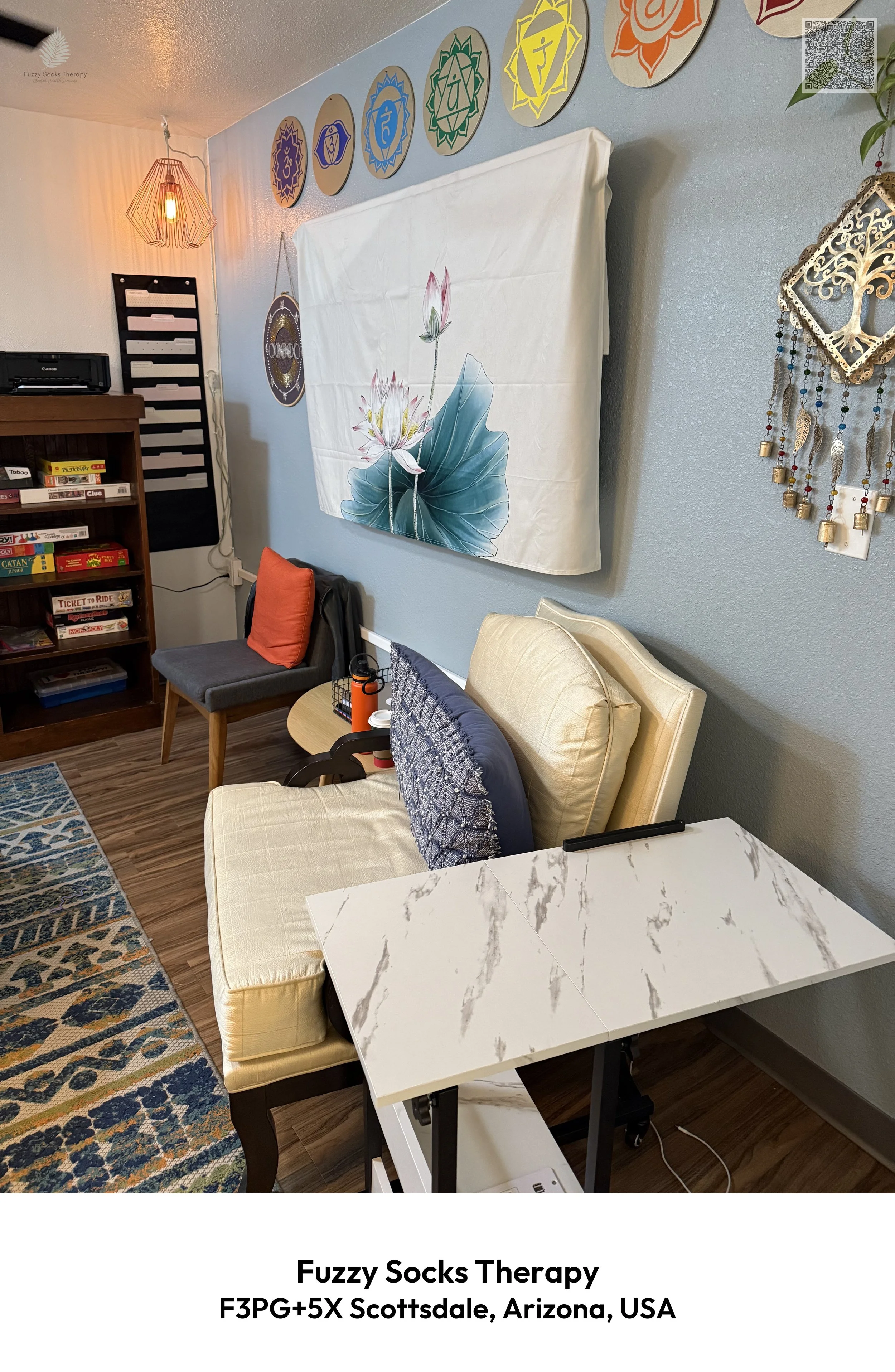
- Quick sensory-safe room checklist: Dim, indirect lighting, ideally below the brightness of typical classrooms, with the option for task lamps. Minimal visual clutter at the child's eye level, with closed storage for materials not in use. Predictable sound environment, soft flooring, and the ability to mute HVAC noise or use white noise. A clear movement path with safe vestibular options, such as a mini trampoline, rocker, or crash pad. A visible, always-available cool-down space, such as a pop-up tent with weighted items and low stimulation.
Some children benefit from 3 to 5 minutes of movement before any seated task. Others need deep pressure through a compression vest or a heavy lap pad to bring arousal down. Sensory profiles change with growth, sleep, and stress, so reassessment should be routine. I encourage families to track which inputs increase regulation versus which help a child simply push through for a short time. The former expands capacity. The latter masks stress that will leak out later.
Interoception, the sense of internal body signals, is often underdeveloped or noisy. If a child cannot notice the build-up of a meltdown until it is too late, we use co-regulation and visual supports to externalize those signals. Color zones are common, but I prefer personalized scales anchored to a child's interests. For one boy who loved weather, we used drizzle, showers, storm watch, and thunderstorm, paired with specific actions. Over six months, he shifted from needing adult prompts at the first sign of rain to self-selecting a break during storm watch.
Co-regulation before self-regulation
Children borrow our nervous systems long before they can manage their own. In practice, that means the therapist sets the tone with pace, voice, and moves. I match the child's rhythm, not the other way around. If a child arrives revved up, I may start seated on the floor, low voice, long exhale, and parallel play. The target is not immediate compliance. It is a shared state that can carry our next five decisions. Co-regulation also means we end sessions at a lower arousal level than we began. I would rather cut a planned activity short than send a child out the door amped and brittle.
Parents and caregivers are not extras here. When they can join a co-regulation routine, the home becomes more predictable. I aim for one or two portable strategies per month, nothing fancy. A three-step script for transitions, a shared breathing pattern during teeth brushing, or a specific vestibular activity before school can reduce morning chaos. Over time, we link these to the child's own sensory language, so the skill sticks even when the adult is stressed.
Communication that fits real autistic language
Autistic communication varies widely, from fluent speech to AAC to minimal output with strong comprehension. The key is to respect the child's path. Many children are gestalt language processors, especially in early stages. They learn whole phrases with intonation and later break them down into flexible parts. Trying to teach single words too early can frustrate both sides. I listen for natural scripts, capture them, then model slight variations. If a child says, All aboard, we might add, All aboard snack train, then, All aboard bathroom train. We are not forcing reciprocity. We are layering flexibility on a comfortable base.
AAC is not a last resort. It is a parallel road that can lower pressure and increase agency. When we introduce a robust AAC system early, we avoid a communication bottleneck later. Families sometimes worry that AAC will delay speech. Clinical experience and research point the other way. More access tends to boost total communication. What matters is consistency and modeling. Adults should speak and tap. Children mirror what they see.
I keep receptive language supports visible. Short, direct sentences, generous wait time, and written or visual cues decrease the guesswork that eats energy. Abstract directives like be flexible or be nice mean nothing during stress. Concrete, observable alternatives help: hands on knees, eyes to the page, ask for space. Over time, we fade prompts toward the child's preferred modes.
Play therapy that honors autonomy
Child therapy for autism requires flexibility within structure. I use play, but not as a Trojan horse for adult agendas. I enter the child's play respectfully, wait, and take turns by protecting the theme. Sensory play is not just for sensory seekers. Even avoidant children benefit when the invitation is paced and optional. I keep a side table with textures that can join a theme without hijacking it. If the child is building a city, the squish of kinetic sand becomes snow. If they are racing cars, a shallow bin of dry beans becomes a gravel pit. Good play contains boundaries, not surprises.
Social skills grow best inside genuine shared activities. I avoid scripted group scenes unless a child asks for them. Instead, we co-create games that require perspective taking in context. When the marble run jams, we troubleshoot. When the tower tips, we talk about grief in small doses. If the sibling joins, we share code words to pause or reset. These moments stick because they are embodied, not abstract.
Trauma therapy with a sensory lens
Not all distress in autistic children comes from autism. Many carry trauma from medical procedures, restraint in schools, bullying, or chronic sensory overwhelm. Trauma therapy helps, but only when adapted. A standard exposure plan can backfire if it ignores interoception or monotropism. We titrate by sensation, not just by story. For one teen who panicked in bathrooms because of hand dryer noise, we first mapped the sequence of internal sensations that led to panic. We built in deep pressure and predictable sound through headphones, then gradually increased time near but not under the dryer. Each step was brief and controllable. What mattered was re-establishing choice and precision.

EMDR therapy can be effective when the format is modified. Bilateral stimulation does not have to be bright lights or fast alternating buzzers. Gentle tapping that the child controls, rhythmic rocking, or even switching gaze between two favorite objects can be enough. Set-up phases take longer, and sessions may run shorter with more frequent pauses. The target memory might be a cluster of sensory moments rather than a single narrative. I focus on resourcing through sensory anchors and co-regulation first, then brief sets of processing linked to images or sounds the child can tolerate. Parents often serve as co-regulators in the room, which not only supports the child but teaches the adult how to recognize and respond to early signs of overload.
Behavior, demand, and dignity
Traditional behavior plans often escalate conflict because they treat demand avoidance as defiance. Many autistic children experience a high cost for shifting tasks, especially when tired or surprised. Adapted approaches, like the CPS model or low-demand periods, help spare relationships while still building skills. I use collaborative problem solving in small bites: define the problem, gather the child's concerns, state the adult concern concisely, and brainstorm options. We do this while moving or playing, not across a table with folded hands.
Rewards and consequences have their place, but as seasoning, not the base. If a plan relies on escalating incentives to force a child through tasks that flood their nervous system, we teach desperation, not independence. Instead, we reduce unnecessary demands, pre-negotiate transitions, and use high-interest anchors. Over months, the child handles more because they trust that therapy will not trap them.
School collaboration that survives the real day
Parents often tell me their child can do a skill in therapy but not at school. The gap usually reflects environment and pacing, not motivation. I ask for short videos of classroom routines and cafeteria noise to understand the load. We then design supports that fit the actual day. A visual schedule that lives in a backpack is useless if it never leaves the backpack. We mount a smaller version on the desk, add an icon for a movement break after the noisiest block, and rehearse how to ask for it without a speech. Sometimes we create a laminated help card that a child can slide to the teacher's desk silently.
Generalization improves when we build bridges. I invite teachers to a brief virtual consult, share two strategies that work, and ask for two they need from me. I also caution against overloading aides with layers of paperwork. One clear plan, one or two key visuals, and a predictable rhythm will do more than a thick binder of goals.
Parents, siblings, and the climate at home
Progress for the child accelerates when the home climate shifts from firefighting to prevention. I meet families where they are. If evenings are chaos, we target just the 5 to 7 p.m. Window, mapping sensory and task demands. We batch changes rather than scatter them. For example, we might bring dinner lights down, add a five minute heavy work routine before eating, and use a single visual for the after-dinner flow. We hold that pattern for two weeks before adding anything else.
Siblings need straight talk, not platitudes. I coach parents to explain autism in concrete terms: Your brother's ears are like microphones with the volume stuck high. When we shout across the room, it hurts. Here is what helps. Then we build family rituals that support everyone, like a quiet hour after school or a code word any person can use for a short break from demands.
When co-parents disagree on approach, couples therapy can lower reactivity and align goals. Not every session needs to be about autism. In fact, restoring a baseline of care and shared leadership often matters more than debating reinforcers. A therapist familiar with neurodivergent therapy can help partners recognize where their own nervous systems are clashing, then design routines that protect both the child and the relationship.
Measuring progress without losing the plot
Data guides us, but the wrong metrics can steer us off course. I track three domains: capacity, agency, and connection. Capacity shows up as longer stretches of engaged play, faster recovery after stress, and fewer late-evening crashes. Agency shows up as spontaneous requests, consistent use of AAC, and the child initiating breaks or help. Connection shows up as shared joy, more flexible turn-taking, and the ability to repair after conflict. We still record targeted behaviors, but we read them through those lenses.
I ask families to rate mornings, mid-days, and evenings on a 0 to 10 regulation scale twice a week. Patterns emerge within a month. We often learn that a mid-day activity, like a crowded lunchroom, is driving evening meltdowns. We cannot always change the lunchroom, but we can wrap it with supports before and after, and we can adjust expectations for the evening window.
A short case vignette
Mia, a 7-year-old autistic girl, loved spinning tops and hated bright light. She entered therapy wary, often hiding under chairs for the first 10 minutes. We started by dimming the main lights and adding a low task lamp near a rug. I brought three tops of varying weight and speed. For the first few sessions, I spun them in silence and let her hand me the next one without asking for it. She emerged sooner each week.
By week four, we used the tops to talk about speed inside the body. Fast, medium, slow became our regulation words. When the fast top wobbled, we practiced deep pressure to steady it, then tried a weighted lap pad while spinning. She began to select the pad on her own before reading tasks. We created a two-card visual for bathroom breaks at school, adding a top icon to link the new routine with our sessions.
Midway through the semester, a classmate teased Mia for covering her ears. She stopped using the hallway break card. We shifted to a trauma therapy lens, mapping the moment with drawings and building back choice. We practiced walking past a recorded hallway noise with headphones on, then off, while holding a favorite top. Two weeks later, she resumed using the break card. Her teacher reported fewer tears at dismissal, and her parent noticed bedtime was 20 minutes faster, on average. At our four-month review, Mia could name when she needed slow, show the card without prompting, and ask for the weighted pad with a gesture or on her AAC screen. The tops still lived on our shelf. They had become more than toys, a shared language.
When to slow down, when to push
Therapy has a tempo. Push too hard and the nervous system stores you as a threat. Go too soft and skills do not consolidate. I use three checks during sessions. First, breath and eyes. If the child's breath is high and shallow and their gaze scans the room, I slow. Second, transitions. If we cannot move between activities without negotiation stacking up, the demand load is too high. Third, recovery. If a rupture takes more than a few minutes to repair, I note it and simplify the next step. On good days, we ride momentum and add a small challenge at the peak. On hard days, we leave wins small and early.
Integrating specialties without fragmenting the child
Occupational therapy, speech-language therapy, and psychotherapy can work together when the team shares a map. Without coordination, families end up with three homework sheets and a child who wants to burn them all. I prefer one shared priority for each quarter. If regulation is the focus, speech might target functional AAC within that regulation context, and OT might shape sensory strategies that the child can use during therapy and at home. As a psychotherapist, I weave in self-advocacy scripts and play-based co-regulation. We meet briefly each month, 15 minutes is usually enough, to review what is sticking.
For children with trauma histories, we layer trauma therapy carefully. EMDR therapy sessions remain short, with generous resourcing and sensory supports. When a child shows signs of dissociation or floods quickly, we pause and invest in stabilization. No technique outruns a nervous system that does not feel safe.
Equity, access, and the quieter barriers
Families sit on waitlists for months and then drive long distances for short sessions. Telehealth can help, especially for caregiver coaching and school consults. Sensory coaching works surprisingly well over video when we include a quick virtual walk-through of the home. We can coach adjustments for noise, light, and space with low-cost tools. A $20 clamp lamp with a dimmable bulb, a thrifted blackout curtain, and a home-made visual schedule can do more than expensive gear that never fits the space.
Culture shapes how families think about help. Some parents fear labels. Others have had painful experiences with systems that punished their children. I try to earn trust with concrete wins and plain talk. We name past harm. We set boundaries around restraint and seclusion, and we rehearse language parents can use in IEP meetings. Dignity is not a luxury add-on. It is a clinical variable. When a child believes adults will protect their body and respect their differences, they enter the room with less armor.
A practical arc for the first three months
- A simple, realistic plan: Weeks 1 to 2: Sensory mapping, co-regulation routines, and environment adjustments at home and in the therapy space. Choose one strength anchor. Weeks 3 to 4: Introduce or expand AAC or visual supports. Practice one transition script and one movement or deep pressure routine. Weeks 5 to 8: Build shared play themes tied to goals. Begin school collaboration with two concrete supports and a short check-in. Weeks 9 to 10: If trauma is present and regulation is stable, add gentle trauma therapy elements or EMDR therapy resourcing with sensory-safe bilateral input. Weeks 11 to 12: Review data on capacity, agency, and connection. Adjust goals. Decide what to fade, keep, or expand.
That arc flexes with the child, but it gives families a sense of direction. It also protects against the drift that comes when every week feels new and urgent.
What changes when therapy is built this way
Children show up more willing. Families stop dreading Tuesday afternoons. Schools see fewer spikes. The skills are ordinary on paper, but they add up. A child who can name their sensory state and ask for a break is less likely to bolt in a grocery store. A teen who trusts that a therapist will not push past their limits is more likely to process the cafeteria fight without spiraling. Parents who learn to co-regulate first and problem solve second report fewer nightly battles and more moments of play that feel like play.
Strength-based, sensory-safe child therapy is not a niche. It is simply good care for autistic children. It respects the brain and body as they are, helps them do what they already do even better, and then uses that platform to reach what matters next. When we let the child lead and make the room fit the nervous system, the work is quieter, steadier, and far more effective.
Address: 3295 N. Drinkwater Blvd., Suite 10, Scottsdale, AZ 85251
Phone: (720) 378-8454
Website: https://www.fuzzysockstherapy.com/
Email: [email protected]
Hours:
Monday: 9:00 AM - 5:00 PM
Tuesday: 9:00 AM - 5:00 PM
Wednesday: 9:00 AM - 5:00 PM
Thursday: 9:00 AM - 5:00 PM
Friday: 9:00 AM - 5:00 PM
Saturday: Closed
Sunday: Closed
Open-location code (plus code): F3PG+5X Scottsdale, Arizona, USA
Map/listing URL: https://maps.app.goo.gl/cqhwvXU4UMg6QL1YA
Embed iframe:
The practice offers in-person therapy in Scottsdale along with online sessions for clients in Arizona, Colorado, and Florida.
Clients can explore services such as trauma therapy, EMDR therapy, Deep Brain Reorienting Therapy, neurodivergent therapy, child therapy, couples therapy, discernment counseling, and parenting intensives.
Fuzzy Socks Therapy is especially relevant for people navigating trauma, dysfunctional family dynamics, ADHD, autism, relationship conflict, and emotional overwhelm.
The website presents a direct, practical therapy style focused on real tools and meaningful change rather than vague advice.
Scottsdale clients looking for trauma-informed psychotherapy can find support that combines deeper healing work with concrete skill building.
The practice also offers help for adult children of dysfunctional families, couples on the brink, and neurodivergent kids, teens, and adults.
To get started, call (720) 378-8454 or visit https://www.fuzzysockstherapy.com/ to book a free consultation.
A public Google Maps listing is also available for Scottsdale location reference alongside the official website.
Popular Questions About Fuzzy Socks Therapy
What does Fuzzy Socks Therapy help with?
Fuzzy Socks Therapy helps with trauma, dysfunctional family patterns, neurodivergence, relationship conflict, emotional overwhelm, and related challenges for individuals, couples, and families.
Is Fuzzy Socks Therapy located in Scottsdale, AZ?
Yes. The official website lists the office at 3295 N. Drinkwater Blvd., Suite 10, Scottsdale, AZ 85251.
Does Fuzzy Socks Therapy offer in-person and online sessions?
Yes. The official site says the practice offers in-person therapy in Scottsdale and online therapy in Arizona, Colorado, and Florida.
What therapy approaches are listed on the website?
The website highlights EMDR therapy, Deep Brain Reorienting Therapy, discernment counseling, play therapy, Dialectical Behavior Therapy, Emotionally Focused Therapy, and practical trauma-informed skill building.
Who provides therapy at Fuzzy Socks Therapy?
The official website identifies the therapist as Lianna Purjes.
Does the practice offer couples counseling?
Yes. The website includes couples therapy, couples intensives, and discernment counseling for couples deciding whether to stay together or separate.
Does the practice work with children and adolescents?
Yes. The site says the practice offers child therapy and support for children, adolescents, and their families.
How can I contact Fuzzy Socks Therapy?
Phone: (720) 378-8454
Email: [email protected]
Website: https://www.fuzzysockstherapy.com/
Landmarks Near Scottsdale, AZ
Drinkwater Boulevard is the clearest local reference point for this office and helps nearby clients place the practice in Scottsdale. Visit https://www.fuzzysockstherapy.com/ for service details.
Old Town Scottsdale is a familiar city landmark and a practical reference for people searching for therapy near central Scottsdale. Call (720) 378-8454 to learn more.
Scottsdale Civic Center is another recognizable local landmark that helps define the surrounding area for nearby professional services. The official website has current contact details.
Scottsdale Stadium is a well-known destination in the city and a useful point of reference for local users. Fuzzy Socks Therapy offers both in-person and online sessions.
Indian School Road is a major corridor that helps many residents orient themselves in Scottsdale. More information is available at https://www.fuzzysockstherapy.com/.
Fashion Square and the surrounding central Scottsdale area are widely recognized by local residents and visitors alike. Reach out through the website to book a free consultation.
Downtown Scottsdale is a strong local search reference for people seeking counseling and psychotherapy services in the area. The practice serves Scottsdale in person and multiple states online.
Scottsdale Road is another major route that helps define the broader service area for clients traveling from nearby neighborhoods. The practice supports individuals, couples, and families.
The Scottsdale arts and civic district is a useful area reference for those familiar with the city center. Visit the site to review specialties and next steps.
Central Scottsdale commuter corridors make this practice relevant for nearby residents who want in-person therapy, while online sessions add flexibility for clients in Arizona, Colorado, and Florida.